As we progress through 2026, the LED road signage industry is undergoing a profound transformation. No longer limited to simply replacing traditional reflective signs with brighter, active illumination, the sector is advancing toward "smart perception and collaborative control." This shift positions LED signage as a critical enabler for smart cities and Intelligent Connected Vehicles (ICV), enhancing safety, efficiency, and sustainability in an era of rising urbanization and autonomous driving technologies.
Core Technological Shifts: Intelligence and Integration
The industry has moved beyond basic 1.0-era substitution of light sources to a 2.0 phase centered on IoT connectivity. Intelligent signage segments are experiencing strong growth, often exceeding broader market rates. A key driver is Vehicle-to-Everything (V2X) integration. Modern LED signs now incorporate sensors and communication modules that enable real-time interaction with vehicles. They can dynamically adjust speed limits, provide hazard alerts, or offer route guidance based on live conditions.
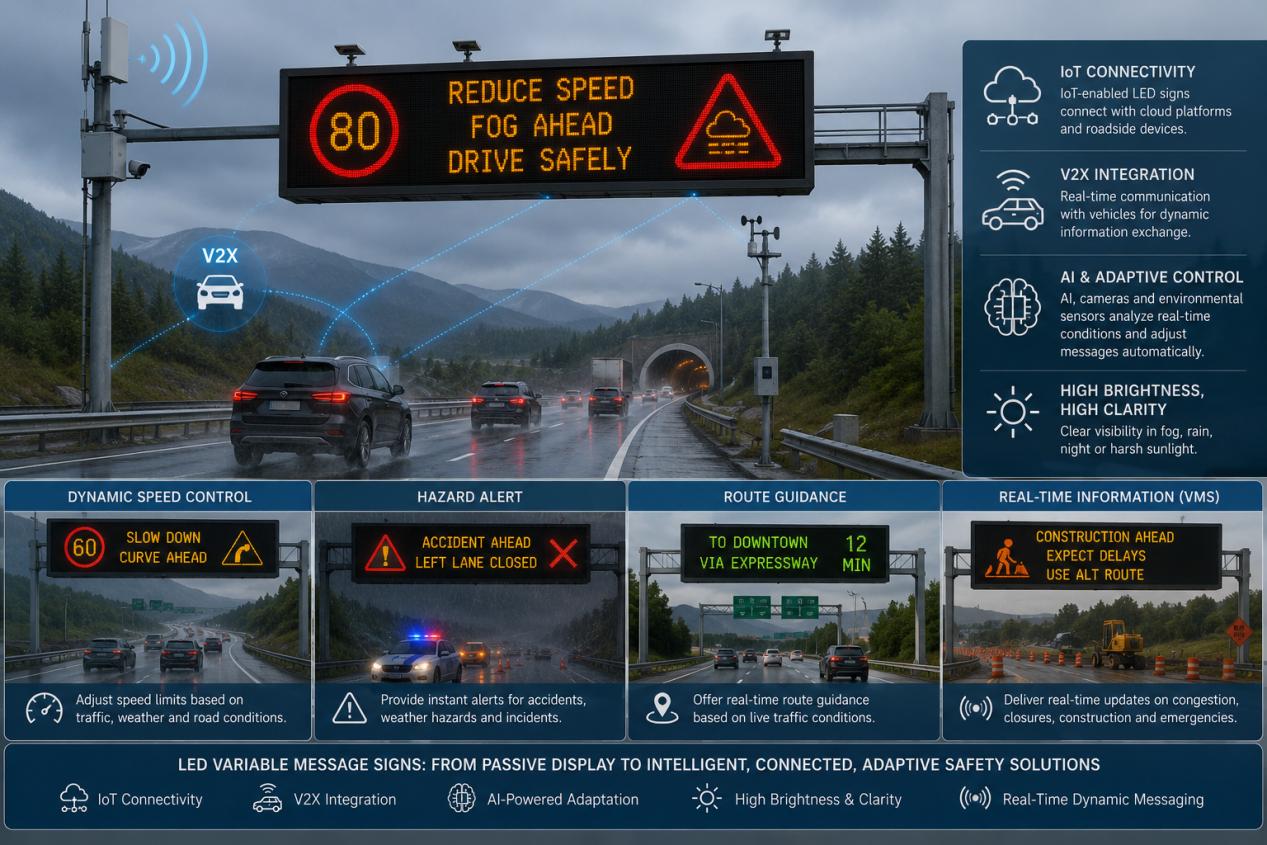
Adaptive control systems further elevate performance. Signs and signals respond automatically to traffic volume, weather, and incidents—flashing warnings on accident-prone curves during fog or rain, for instance. These capabilities leverage AI, cameras, and environmental sensors for proactive safety rather than passive display.
High-brightness, high-clarity active LED signs are now standard on highways, tunnels, and hazardous bends, ensuring visibility in extreme conditions where passive reflectors fail. Dynamic Variable Message Signs (VMS) deliver real-time updates on congestion, lane closures, construction, or emergencies, enabling "scenario-based adaptation."
Sustainability and Off-Grid Innovation
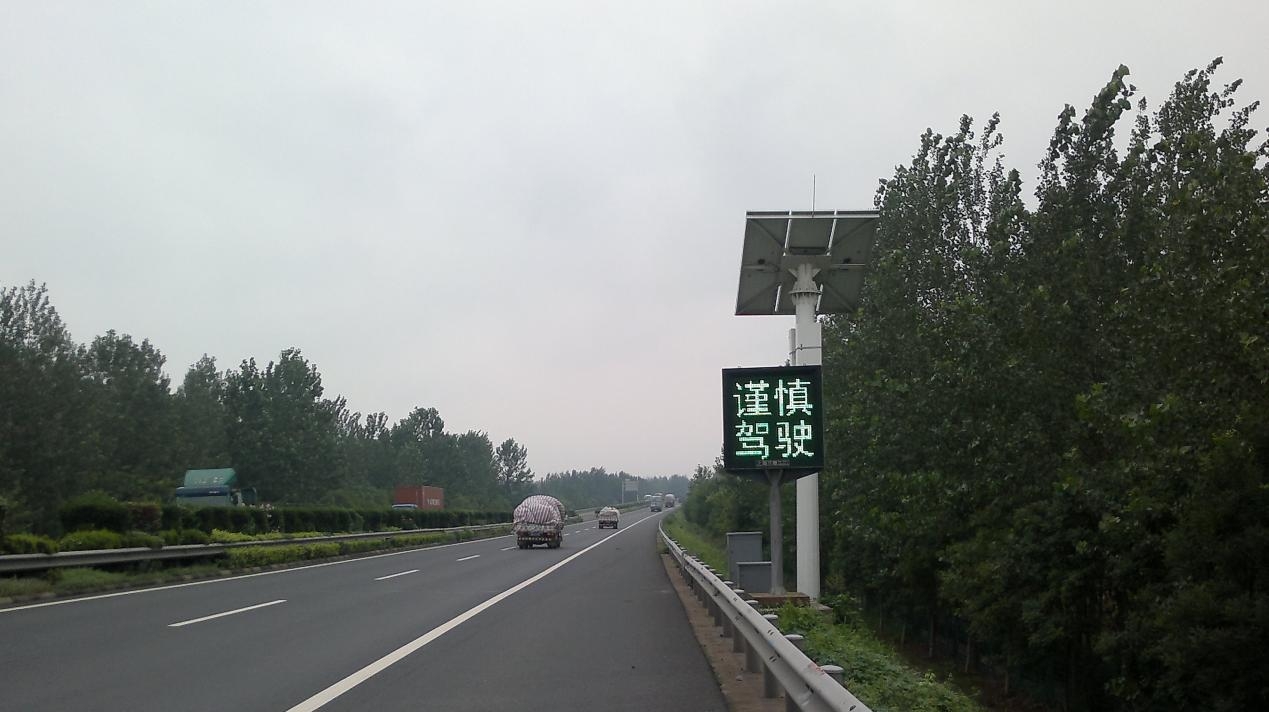
Solar-powered LED signage has become a market staple, particularly in remote highways, rural roads, and areas without reliable grid access. Advances in photovoltaic efficiency, battery storage (including better resilience to cloudy or snowy conditions), and power management allow these systems to operate autonomously for extended periods. This reduces installation costs and supports low-carbon infrastructure goals. Solar variants are growing faster than grid-powered ones in many segments.
Market Dynamics and Regional Variations
Global demand for LED traffic signs and signals continues to expand steadily, driven by road safety initiatives, smart city investments, and the need to replace aging passive infrastructure. Estimates place the broader market in the low billions, with solid single-digit to low double-digit CAGRs projected through the 2030s, fueled by urbanization and ICV adoption.
Asia-Pacific, led by China, remains the primary growth engine due to massive infrastructure builds and smart highway programs. Europe emphasizes stringent energy efficiency standards (favoring premium, high-performing products), which elevate average unit prices while supporting sustainability mandates. North America benefits from smart city grants and V2X pilots.
The competitive landscape increasingly favors companies with system integration expertise—those that deliver not just "lights" but comprehensive traffic ecosystems. New standards for highways promote larger, sometimes double-sided LED lane indicators to meet modern safety demands.
Looking Ahead: A Talking, Thinking Network
In 2026, LED road indicators have evolved into perceptive, communicative nodes within intelligent transportation networks. They contribute to fewer accidents through better visibility and real-time alerts, smoother traffic flow via dynamic management, and greener operations through solar and efficient designs.
Challenges remain, including standardization for seamless V2X interoperability, cybersecurity for connected devices, and equitable deployment across urban-rural divides. Yet the trajectory is clear: these "smart signs" are becoming decision-support terminals that enhance human and machine drivers alike.
As smart mobility accelerates, investment in intelligent LED signage offers high returns in lives saved, congestion reduced, and infrastructure modernized. The future of road guidance isn't just brighter—it's smarter, safer, and more connected.
 Facebook
 Twitter
 Skype
Skype Email
Email Instagram
 Linkedin
 YouTube
 WhatsApp