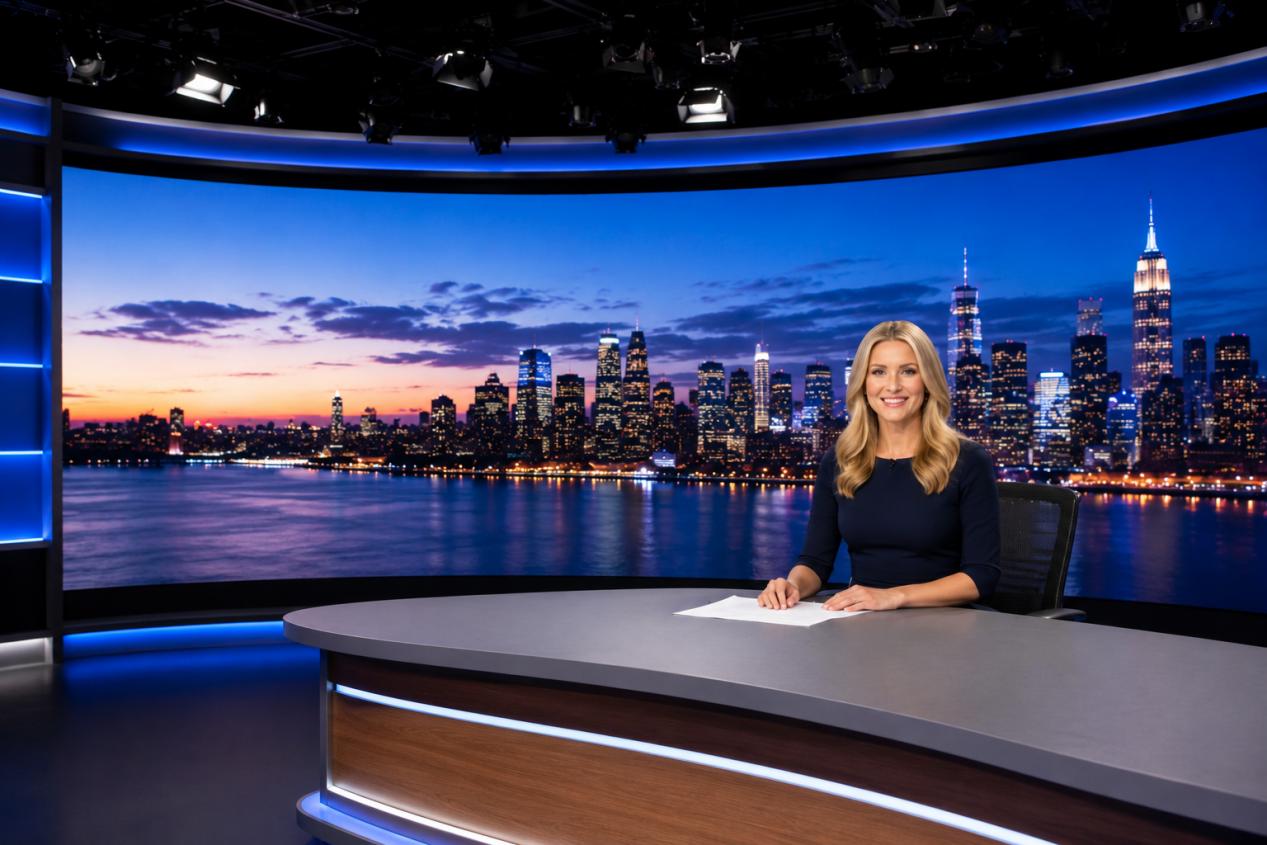
In 2026, LED displays have firmly cemented their role in the broadcasting industry, moving far beyond static backgrounds to become dynamic partners in content creation, immersive storytelling, and seamless live production. What was once a simple video wall has transformed into a cornerstone of digitized, intelligent, and ultra-high-definition workflows. Broadcasters are leveraging these screens to cut post-production time, boost on-air realism, and deliver viewer experiences that feel increasingly cinematic.
XR and Virtual Production Take Center Stage
The biggest shift is the widespread adoption of XR (Extended Reality) virtual studios. LED walls paired with real-time rendering engines like Unreal Engine and advanced camera tracking systems now create "what you see is what you get" environments. Gone are the days of wrestling with green screen spill and heavy compositing in post. Talent interacts naturally with photorealistic virtual worlds that respond instantly to camera movement and lighting changes.
Newsrooms, talk shows, and entertainment productions are embracing high pixel-density Micro LED and Mini LED panels to build believable virtual sets. This delivers deeper immersion while allowing for rapid scene changes—perfect for everything from election coverage to high-concept variety specials. Industry reports highlight how falling costs and improved panel reliability are making these setups accessible even to mid-sized studios, blurring the lines between physical and digital scenery.
Ultra-HD Excellence and Picture Perfection
Broadcast-grade LED screens in 2026 routinely support native 4K and 8K workflows with rock-solid frame synchronization, eliminating tearing and ensuring flawless live output. High dynamic range (HDR) performance has leaped forward thanks to advanced calibration techniques like single-point optical correction, maintaining excellent grayscale and color accuracy even at lower brightness levels.
RGB Mini LED and emerging Micro LED technologies are driving richer color volumes and contrast, helping broadcasters meet demanding HDR standards. While true consumer 8K adoption remains niche due to content and bandwidth hurdles, production environments benefit enormously from the headroom these displays provide for crisp, future-proof visuals.
Smarter, Lighter, and More Integrated Systems
Modern broadcast LED solutions emphasize lightweight, modular designs that integrate intelligent control systems. Remote monitoring of power, temperature, and humidity, along with seamless streaming signal compatibility, reduces operational headaches. Fine-pitch panels (P1.0 and below) enable nearly invisible seams in multi-panel setups, ideal for flagship interview programs and interactive "smart wall" applications.
Touch-enabled or infrared interactive screens are increasingly common for data-driven segments like weather or real-time news graphics, fostering natural presenter-audience connections. Transparent LED panels add artistic depth to stage productions, creating layered visuals that enhance storytelling without cluttering physical space.
Looking Ahead: Sustainability, AI, and Hybrid Innovation
The industry is in a high-barrier, high-reward phase. Micro LED commercialization, combined with AI-driven content optimization and energy-efficient designs (many panels now incorporating significant recycled materials and lower power draw), points to a more sustainable future.
We’re seeing early experiments with fully immersive 360° LED volumes and tighter integration between LED walls, AR overlays, and even projection alternatives for virtual production. As AI assists with real-time rendering and automated calibration, the line between studio and virtual world will continue to dissolve.
For broadcasters, the message is clear: LED technology is no longer just infrastructure—it’s a creative asset driving efficiency, visual excellence, and audience engagement. Those investing now in flexible, high-performance systems will be best positioned to thrive as content demands grow more sophisticated and immersive. The studio of the future isn’t just lit better; it’s alive with possibility.
 Facebook
 Twitter
 Skype
Skype Email
Email Instagram
 Linkedin
 YouTube
 WhatsApp