Introduction
Indoor cultivation often faces significant challenges due to inadequate natural light. When selecting LED grow lights, key parameters such as photoperiod, hanging height, and spectral composition critically influence plant growth outcomes. This guide addresses common questions and provides practical advice for effective lighting.
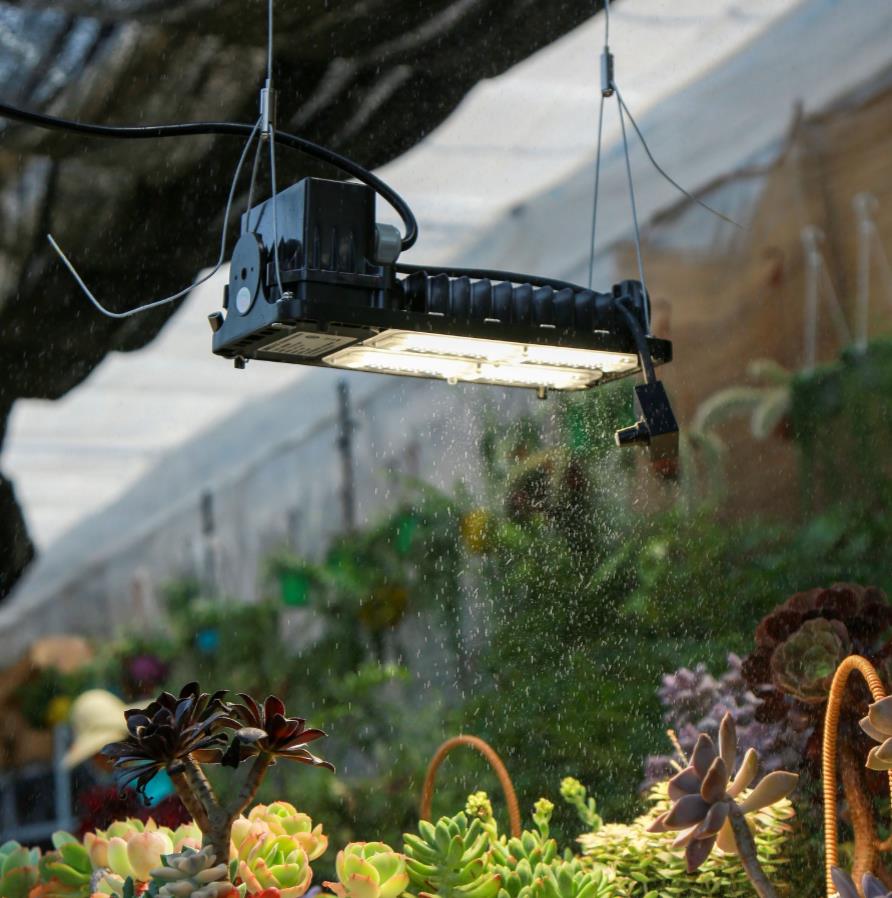
Table of Contents
l How long should grow lights be on each day?
l What is the proper hanging height of the grow lights?
l How to choose the right grow light for your growing space?
l Why does Sansi recommend full-spectrum grow lights?
l Are grow lights hot, energy-intensive, and safe to use?
Ⅰ. How long should grow lights be on each day?
Photoperiod (daily light duration) and light intensity (PPFD, measured in μmol/m²/s) must align with plant requirements.
Plants are generally categorized by photoperiod sensitivity:
· Short-day plants (long-night plants)::Require a dark period exceeding a critical length (typically >12–14 hours) to initiate flowering; otherwise, they remain in vegetative growth. Recommended total light exposure (natural + supplemental): 6–8 hours. Examples: chrysanthemums, poinsettias, rice, soybeans, morning glory, cocklebur.
· Long-day plants (short-night plants): Require light periods longer than a critical threshold (typically >14 hours) to promote flowering. Recommended total light exposure: 14–16 hours. Examples: spinach, lettuce, sugar beet, some summer-flowering plants (e.g., certain echinacea species).
· Day-neutral plants: Insensitive to day length; flowering depends primarily on maturity. Recommended total light exposure: 8–12 hours or more flexible scheduling. Examples: tomatoes, cucumbers, corn, roses, most common houseplants (e.g., begonias, some geranium varieties).
Ⅱ. What is the proper hanging height of the grow lights?
Hanging height directly affects the PPFD reaching the plant canopy. Closer placement increases intensity but reduces coverage, while excessive distance leads to insufficient light. Refer to the PPFD distribution map provided in the product details to adjust height so the canopy receives optimal light levels. Combine with timers to manage photoperiod effectively.
Different plants have unique light compensation points and saturation points; adjust settings according to specific growth habits.
Ⅲ. How to choose the right grow light for your growing space?
Selecting suitable grow lights requires consideration of space size, plant type, and cultivation method:
l Seedlings or multi-tier shelving:
LED light bars or clip-on lights offer flexible placement across different heights. T8 tube lights provide uniform, controllable close-range lighting.
l Balcony or indoor potted plants:
Full-spectrum panel lights, wing-style fixtures, or BR30 40W grow bulbs deliver soft, even light that balances growth needs with visual appeal.
l Grow tents or greenhouses:
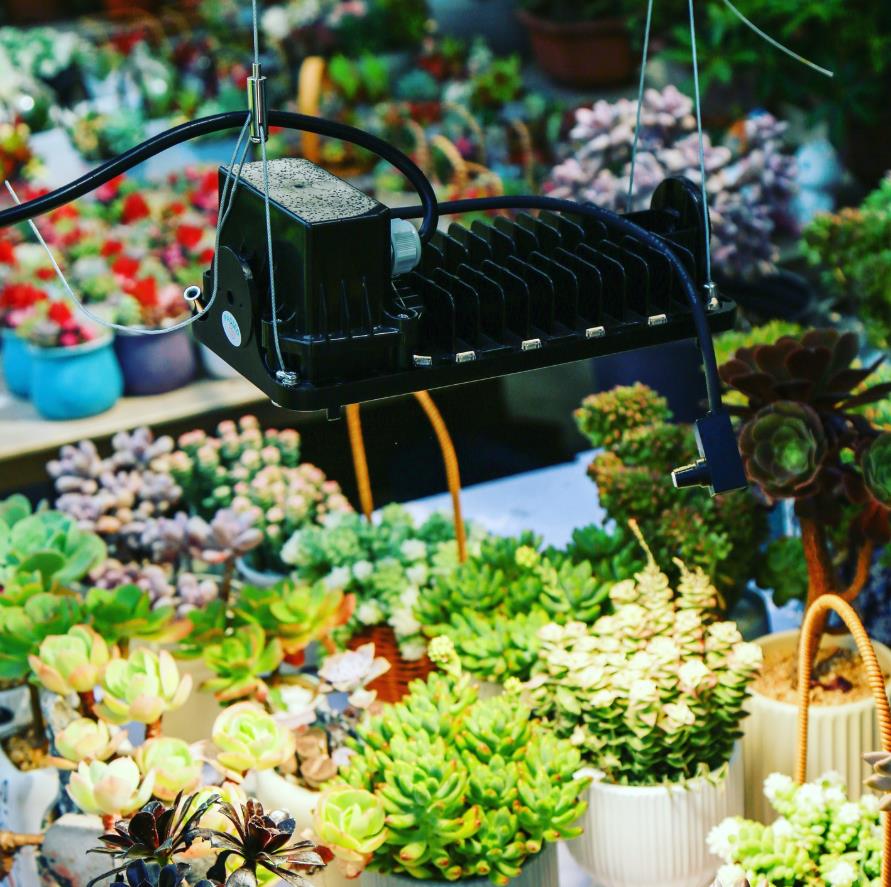
High-power panel lights are recommended for wider coverage and higher intensity, supporting dense planting or high-demand crops.
l Desktop plants or indoor plant shelves:
Clip-on grow lights with gooseneck arms and A-clamps allow precise adjustment of angle and height.
l Plants with vertical growth habit:
Freestanding grow lights, such as T10 vertical tube lights or UFO-style vertical lamps, offer better vertical coverage.
Sansi also provides professional lighting recommendations tailored to various growing scenarios, helping users design more scientific and efficient lighting solutions.
Ⅳ. Why does Sansi recommend full-spectrum grow lights?
For indoor growing, Sansi adopts a 4000K neutral white full-spectrum approach, fundamentally different from traditional red-blue grow lights. Red-blue lighting often creates harsh “pink pollution” indoors, disrupting aesthetic harmony and causing visual discomfort due to scattered light. In contrast, 4000K full-spectrum white light blends naturally into living spaces, supporting plant growth while maintaining a pleasant environment for daily life.
Additionally, Sansi grow lights feature a CRI 95+ high color rendering index. High CRI closely mimics natural sunlight, allowing plants to display true, vibrant colors and enabling growers to clearly observe leaf changes, monitor nutrition, and detect health issues early for more informed and reliable plant care.
Ⅴ. Are grow lights hot, energy-intensive, and safe to use?
Compared to traditional lighting, LED grow lights offer significant advantages in energy efficiency and thermal management.
l Efficient heat dissipation & energy savings:
Sansi adopts ceramic heat dissipation technology, where the LED chip’s thermal pad is directly bonded to the heat sink, greatly reducing thermal resistance. This allows heat to dissipate quickly, improving both cooling efficiency and luminous efficacy while lowering power consumption.
l Long lifespan & stable output:
Due to its excellent heat dissipation performance, Sansi grow lights are durable companions for years of plant growth, not frequent-replacement consumables.
l Multi-layered safety protection:
Sansi grow lights utilize insulating ceramic materials, LED modules are equipped with flame-retardant lenses, and products comply with multiple international safety certifications. This ensures long-term, stable, and safe operation even in humid indoor growing environments.
Conclusion
Why do plants still become leggy or fail to flower even with grow lights?
Healthy plant growth relies not on a single factor but on the synergy of light, temperature, water, air, and nutrients. Grow lights can truly enhance growing efficiency and success only when they provide appropriate spectrum, sufficient intensity, and meet the plant’s daily photoperiod needs.
Whether cultivating herbs or managing a more systematic indoor garden, a scientific, well-matched lighting strategy remains a decisive factor for success.
Let light truly engage and accompany the growth of every plant.
Sansi — growing a greener future with you.
 Facebook
 Twitter
 Skype
Skype Email
Email Instagram
 Linkedin
 YouTube
 WhatsApp